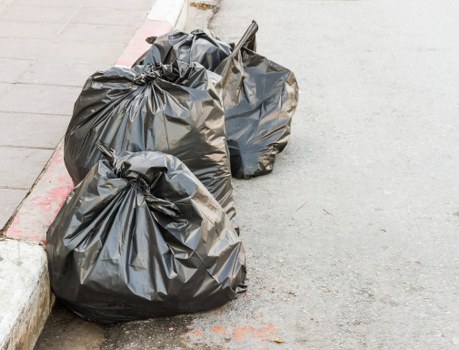
Recycling and Sustainability for House Clearance and Home Clearance Services
Our house clearance sustainability policy sets a clear standard: we aim to achieve an 85% recycling and reuse target across all clearances by 2028. This house clearance ambition is not just a number — it drives day-to-day decisions on-site, at transfer stations and in our choice of partners. From the initial assessment of household contents to the final sorting of materials, every step is designed to divert usable items from landfill and extend the life of furniture, appliances and materials through reuse and recycling.We recognise that effective waste management for a house clearing service depends on local infrastructure and borough-level waste separation rules. In many boroughs, residents separate glass, paper and card, food waste, textiles and small electricals; our teams follow the same approach when sorting materials at clearance sites. By aligning with local council expectations we minimise contamination, maximise recyclability and reduce processing costs at civic amenity sites and transfer facilities.
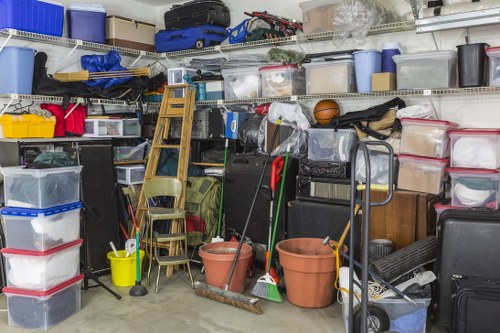 As a responsible house clearance service, we prioritise recovery routes that keep value in the material chain. We work with a network of local transfer stations and reuse centres—these include municipal transfer stations, community reuse hubs and licensed waste consolidation yards—so items collected during a clearance can be routed quickly to the right destination. Where bulky items are intact and reusable they go to charity partners; where items are broken they are dismantled and their components recycled.
Partnerships with charities are central to our reuse strategy. We maintain relationships with local and national charities that accept furniture, working appliances and household goods, giving them a second life and supporting neighbourhood services. Our charity partners include furniture re-use organisations, community workshops that repair and redistribute household goods, and specialist charities that handle textiles and books. By coordinating collections with these partners we reduce waste transport miles and increase the rate of reuse from each house clearance.
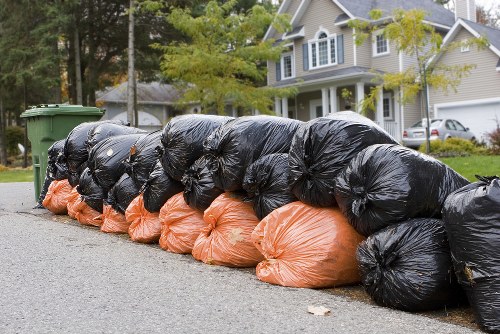
Local Transfer Stations and Waste Separation
We make active use of local transfer stations in the boroughs we serve. These sites perform an essential role: they consolidate segregated streams such as wood, metal, mixed recyclables, gypsum, and plasterboard for onward recycling. Our teams pre-sort materials on-site so that items arrive at transfer facilities in the correct stream. This approach mirrors the boroughs' kerbside separation schemes — the more consistent the sorting, the higher the recovery rate at downstream processors.Practical recycling activities we routinely carry out include:
- donation of reusable furniture and homeware to charities
- recycling of paper, card and mixed packaging
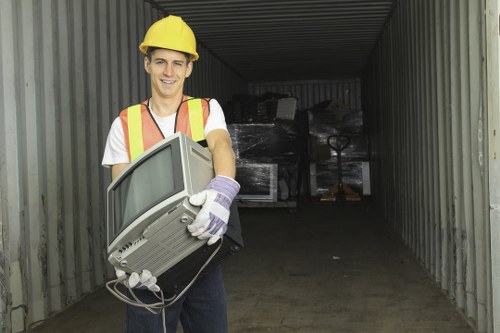
- collection and safe disposal of WEEE (electricals) to licensed recyclers
- separation and recycling of metals, glass and plastics
- segregation and safe handling of hazardous items such as paint and chemicals
To support a low-carbon operation, we invest in a fleet of low-emission and electric vans for smaller clearances and plug-in hybrid vehicles for heavier loads. Our logistics planning uses route optimisation so that multiple collections in the same neighbourhood are combined, cutting mileage and emissions. We also practise load consolidation at transfer stations, reducing the number of journeys to final processing centres. Low-carbon vehicles and smart routing are key to lowering the carbon footprint of every house-clearing job.
 Sustainability in house clearances also means transparent reporting. We monitor metrics such as diversion rate, tonnes reused, tonnes recycled and CO2-equivalent emissions from transport. Regular environmental audits help us track progress toward our recycling percentage target, identify opportunities for improvement and validate the effectiveness of partnerships with charities and recycling facilities. These audits are also useful for clients who require proof of responsible disposal for estates or property management.
Practical Commitments and Community Benefits
Beyond metrics, our approach delivers tangible community benefits: usable household items flow to local families and charities, materials get recovered for manufacturing, and fewer items go to landfill. We train crews in best practice separation and safe handling, and we update procedures to reflect borough-specific guidance on waste streams. Every clearance is an opportunity to support a circular economy: inspecting items for reuse, diverting materials to the correct transfer station, and choosing the lowest-carbon transport option available.In summary, our house clearance and home clearance services combine an aggressive recycling target, strong charity partnerships, active use of local transfer stations, and a low-carbon vehicle fleet to deliver sustainable outcomes. We are committed to continual improvement — adapting to borough waste policies, enhancing reuse networks and investing in low-emission technologies — all to ensure that clearances are handled with environmental responsibility at their core.