Health & Safety Policy for House Clearance Services
 Purpose: This Health and Safety policy sets out the principles, responsibilities and safe working practices for all personnel involved in house clearance, home clearance and property clearance operations. It is intended to reduce risk, prevent harm and ensure that each clearance project is executed with care and professionalism. The policy applies to routine clear-outs, sensitive estate clearance assignments and complex residential clearance projects where robust planning and hazard control are required.
Scope and responsibilities
All staff, contractors and operatives engaged in residential clearing or estate clearance tasks must understand their roles. Management will provide leadership, adequate resources and training. Operatives are required to follow safe systems, report hazards and use personal protective equipment. The policy covers routine clearing, bulky waste handling, and clearance from occupied or vacant properties and sets out expectations for supervisors and contracted partners.
Risk assessment and planning
Prior to any house clearing activity, a documented risk assessment must be completed. This assessment identifies hazards such as sharp objects, asbestos-containing materials, biological contamination, rodents, unstable structures and diverse waste types. Control measures will be recorded, communicated and reviewed throughout the live clearance. Planning includes safe access, segregation of items and establishing safe work zones to protect operatives and the public.The planning stage includes access and egress arrangements, manual handling planning, vehicle and plant positioning and ensuring that welfare facilities are available where required. Teams must be briefed on the clearance plan. Use of the phrase home clearance health and safety emphasizes the need to protect occupants, staff and members of the public while maintaining efficient removal operations.
Personal protective equipment (PPE) is mandatory where hazards exist. PPE examples include gloves, eye protection, respiratory protection, high-visibility clothing and safety footwear. Clothing must be maintained and replaced when damaged. Equipment checks and daily tool inspections are part of the safe system. Typical PPE guidance includes:
- Gloves: puncture-resistant for sharp items
- Respirators: when dust or biohazards present
- High visibility: when working near vehicle movement
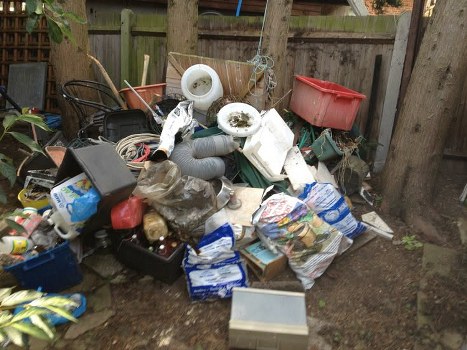
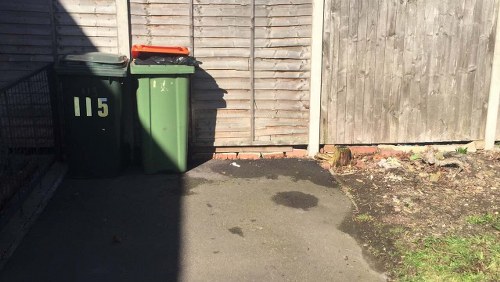 Waste categorization and segregation form a core control. Items should be classified as reusable, recyclable, hazardous or general waste. Hazardous items such as chemicals, batteries, medical waste and electronic waste require special handling protocols, secure containment and clear labeling prior to removal from the property. For safe property clearance, segregate materials on-site and use clearly marked containers to reduce cross-contamination and streamline responsible disposal routes.
Manual handling protocols emphasize team lifting, mechanical aids and load planning to reduce musculoskeletal injury. Operatives must use lifting aids, trolleys and seek assistance for bulky items. The policy supports regular instruction and practical training in safe lifting techniques to ensure effective house clearing without injury. Ergonomic awareness and simple mechanical solutions minimize the likelihood of strain during heavy lifts.
Special risks include sharps, syringes and potential infection control situations. When encountered during property clearance, sharps must be contained in approved puncture-resistant containers and disposed of via designated waste streams by competent handlers. Surface cleaning and disinfecting practices are applied where contamination is identified and operatives follow hygiene protocols to reduce biological risk.
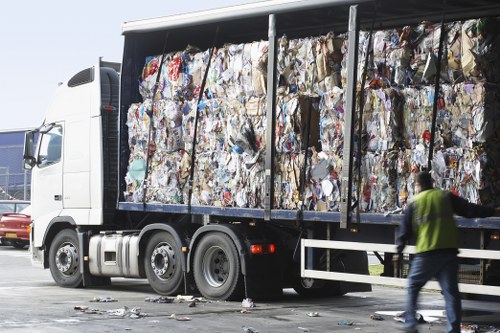
Vehicles and transportation are managed to prevent vehicle-related incidents. Loads must be secured, weight limits observed and drivers must be trained in load restraint and safe driving during clearance operations. Use of specialist removal vans and secure containment minimizes debris loss during transit for estate clearance projects. Vehicle inspection routines and load checks are performed before departure for every job.
 Emergency response and reporting are central to the policy. All staff must know emergency procedures for fire, medical incidents and structural concerns. Assembly points, first aid arrangements and escalation steps are established for every operation. Incidents and near-misses must be reported promptly and investigated to prevent recurrence; lessons learned will be incorporated into subsequent house clearing plans.
Training, competence and supervision ensure that house clearance teams remain capable and safe. New operatives receive induction training covering hazard awareness, equipment use, manual handling and safe disposal methods. Supervisors monitor compliance, provide refresher sessions and mentor operatives to maintain competence across all home clearance tasks. Continuous learning supports a culture of safety and professional performance.
 Monitoring, review and performance measurement complete the safety framework. Regular audits, workplace inspections and review of incident records support risk reduction. The policy will be reviewed periodically to incorporate operational learning, technological advances and best practice in residential and property clearance activities. Commitment to safety remains the foundation of our approach to house clearing, protecting people, properties and the environment while delivering a dependable clearance service.